
Regional research
How we ensure comparability across markets
A regional study is only useful if a difference between two countries is a real difference, not a side effect of how the research was done. These are the controls we apply at each stage.
1. Sampling
The target group is defined once, in the same terms for every market: who qualifies, in which cities or regions, and with which quotas for age, gender and other criteria.
Where markets genuinely differ, for example in income levels or in the cities that matter, we set local definitions that mean the same thing, and state them in the report.
2. Questionnaire and translation
- One master questionnaire. All language versions come from one approved master. Question order, wording and answer scales are kept the same.
- Controlled translation. Each version is translated from the master and back-checked against it before fieldwork.
- Recorded local adaptations. Brand lists, price points, currencies and income bands are adapted by market, and each adaptation is recorded.
3. Fieldwork quality control
Data collection is centralized on our own research platform, and our fieldworkers work through our own app. The same controls apply to every market in the study.
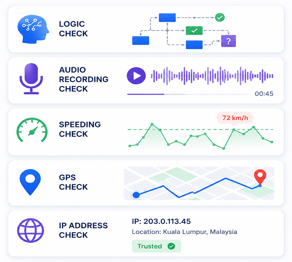
- Real-time monitoring and validation. Incoming data is validated automatically, for example for answering speed and for contradictions between answers.
- Dedicated operation and QA team. One team manages and evaluates panels and fieldwork, all controlled on one platform.
- Multi-angle verification. We verify interviews through GPS tracking, audio recordings, image validation and AI-powered scoring.
- AI quality control. AI checks data consistency, response validity and discrepancies between recorded interviews and submitted answers, to detect fraudulent or low-quality data.
4. Data processing
- One codebook and one set of cleaning rules for all markets.
- All markets merged into one data file with a country variable.
- Open-ended answers coded to a common code frame.
5. Reporting
Every market is reported on the same measures, with the same charts, in one report. Where a figure is not comparable between countries, we say so in the report rather than show it side by side.
What remains different
No method removes every difference between countries. People in different markets use rating scales differently, and online panels do not reach the same share of the population everywhere. We point out these limits in the report, so your team can read the comparison with the right caution.